Why Developers Should Care About Organizational Culture
Good teams don't just happen – A developer's take on organizational culture

We’re members of an organization before we’re developers, so organizational culture affects us more than we realize. That’s why we need constant attention to whether this organization is healthy, whether we’re working with energy and productivity.
But I’ve often seen most developers pay lots of attention to technology or development culture while showing little interest in organizational culture. It’s understandable - we’re already swamped processing piled-up work and studying the frameworks and new paradigms that pour out every year, plus there aren’t many issues arising from organizational culture within dev teams.
In fact, over the 4 years I’ve worked as a developer, when I asked senior developers about organizational culture, the responses were roughly this:
Organizational culture…? It’s important. But I’m so swamped with issues right now…
And the senior developers who gave me these responses were genuinely busy at work. But the fact they could say this means organizational culture had fallen in their personal priorities - relatively speaking, the importance of organizational culture hadn’t really hit home for them.
So in this post I want to talk about why we as team members should care about organizational culture, and what we can do for organizational culture starting tomorrow. Of course, the CEO as organizational leader plays the most important role in forming good organizational culture, but I’ve never been a CEO and don’t particularly want to be one in the future - I’d rather just code - so I’ll only unpack this story from a team member’s perspective.
Do Developers Really Need to Care About Organizational Culture?
Some of you are probably thinking this. Do developers really need to care about organizational culture? Shouldn’t culture staff or the CEO care about and lead organizational culture improvements?
Actually yes. Establishing proper organizational culture is a key goal of culture teams, or sometimes HR teams handle it if there’s no culture team. And it’s true that if the CEO doesn’t care about improving organizational culture, no amount of employee demands will improve it. So we can ask again:
So organizational culture isn’t my responsibility… shouldn’t I focus on being good at programming as a developer?
Well, that’s also true. As a developer you should obviously be good at programming. Actually I think having the desire to be good at programming matters more than being good itself. This is a basic desire and professional responsibility for people with the developer occupation.
It sounds cold but it’s obvious - imagine an Overwatch pro gamer in bronze tier. Right there you’d think “Wait, bronze?” Plus if this person stayed in the depths for 5 years, something’s wrong.
But anyway, for people who make a living programming, being good at programming is ultimately a passive skill. Good developers need to think beyond programming. Because we’re ultimately people working between computers and humans, we can’t be free from the world outside computers.
In that world outside computers are teammates I work with, beyond them our whole team, and beyond that our company. I’ll emphasize again - we’re absolutely not people who only work with computers. Even if you’re a digital nomad traveling the world working remotely, you’ll constantly need to log into Skype at dawn to match Korean work hours.
Ultimately we can’t help being affected by our organization, and good organizational culture ultimately affects individual team members’ happiness, work fulfillment, and vision. This is why I think developers should also care about organizational culture.
Caring about organizational culture naturally includes thinking about good organizational culture. Good organizational culture usually doesn’t just pop up overnight, so it takes combined effort from team members like us and leaders like CEOs to barely take root in an organization.
So what actions can we take for organizational culture - for our team - starting tomorrow?
Let’s Be Happy First
I’m someone who thinks “if individuals are happy, the organization is happy.” If your morning commute feels like hell every day and you just stare blankly coding at boring work in the office, is that organization healthy? I’d say probably not. Plus these problems don’t show outwardly due to what’s commonly called social life.
Actually my saying “if individuals are happy, the organization is happy” isn’t some pie-in-the-sky talk. Research results already show that people with positive emotions like happiness have better work efficiency, focus, and ability development. This individual development inevitably positively affects the organization too.
A somewhat well-known concept in this field is psychological capital, a concept created by management scholar Fred Luthans in 2000. This concept already has many papers and active ongoing research, so I recommend Googling it.
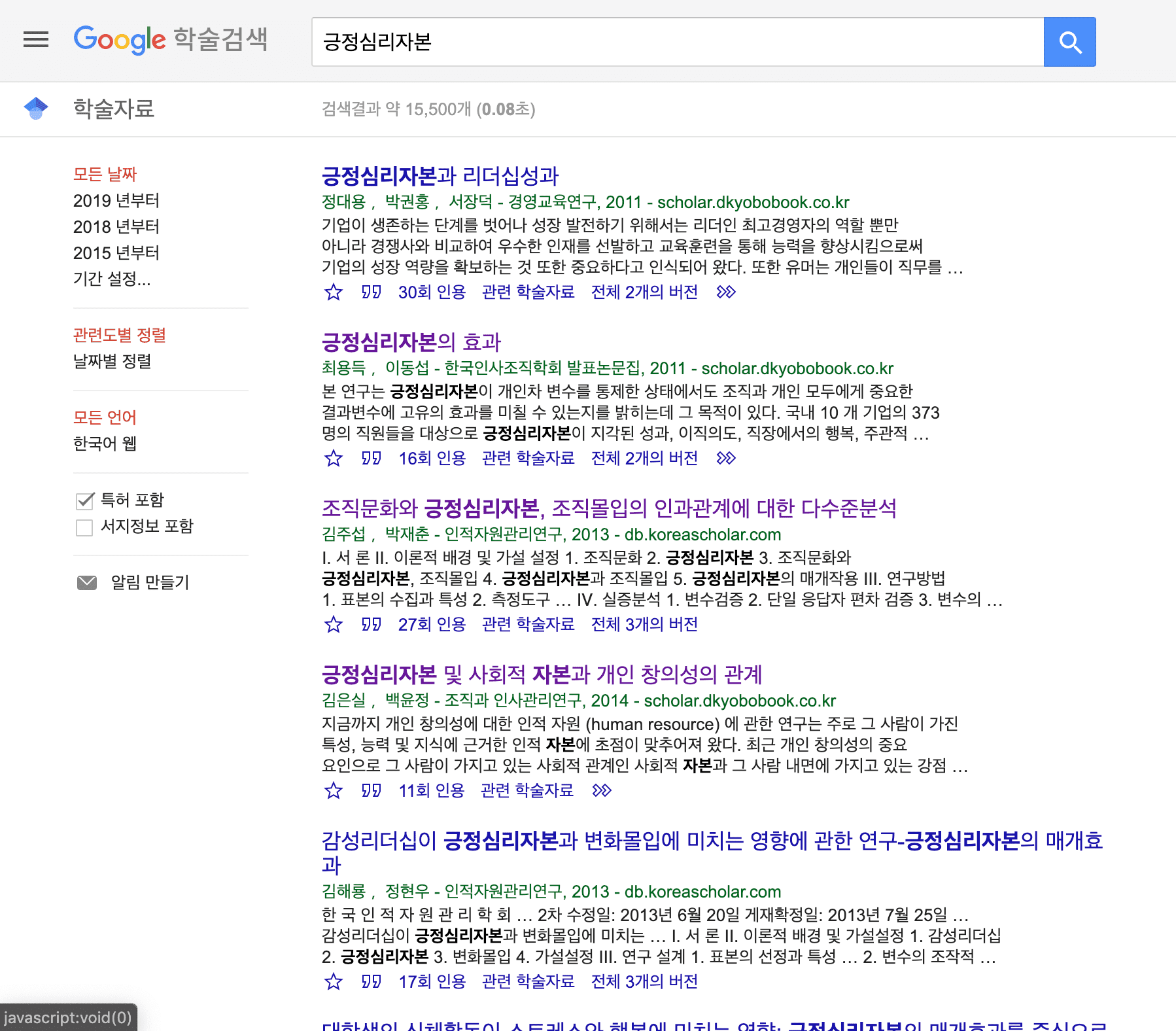 Searching "psychological capital" on Google shows many academic materials
So how can individuals become happy within organizations? While it’s good for organizations themselves to care, think, and help team members be happy, unfortunately many organizations still don’t think deeply about this power of happiness.
But that doesn’t mean individuals can’t do anything. Small actions by individual team members can naturally create an implicit organizational atmosphere. Plus no matter how much organizations care about team member happiness and create top-down happy organizational culture, if the explicit organizational culture created by the organization doesn’t match the implicit organizational culture created by individuals, it might look good on the outside but can rot from within.
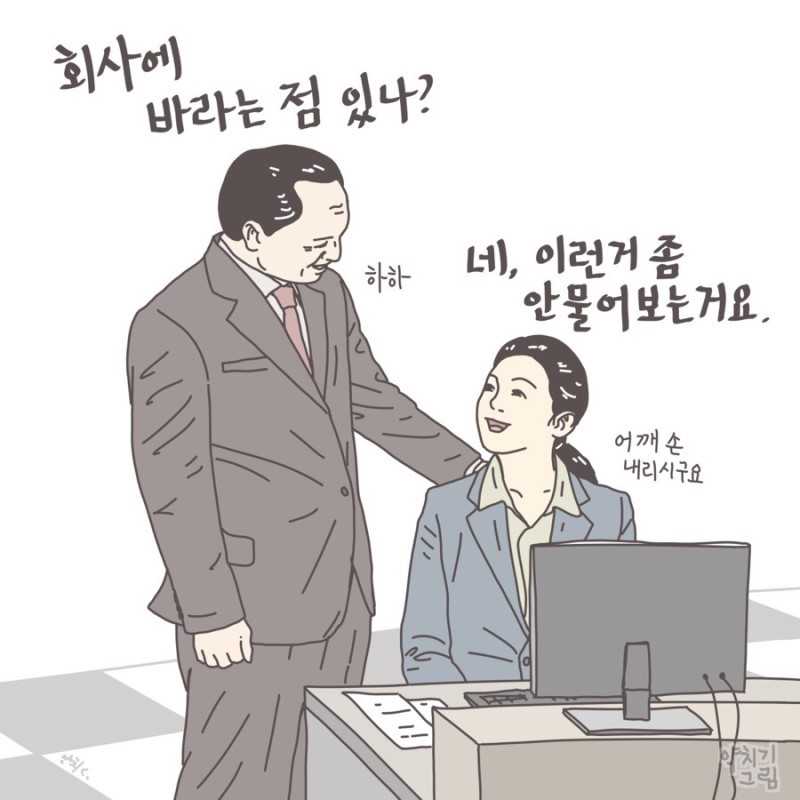 Kind of like this feeling
That’s why it’s important for team members to build implicit organizational culture alongside the explicit organizational culture organizations create. So let’s look more specifically at what actions and mindsets we should have to build implicit organizational culture.
Respect Your Colleagues
I was active as a b-boy from 2004 when I was in 7th grade until 2011 when I enlisted in the military. Not just a school club - I was part of a pro b-boy crew that placed 3rd in Seoul at the CYON BBOY CHAMPIONSHIP. I was in the hip-hop scene for about 7-8 years.
 That's me making a V on the right. Almost 10 years ago so I definitely look younger. Jealous...
Hip-hop strongly emphasizes the spirit of Respect, which literally means respecting each other. B-boys provoke and battle each other with various gestures and dance, but underneath lies the spirit of thinking of opponents as fellow b-boys.
When I was in high school, there was a famous practice studio called Munrae YMCA where everyone from neighborhood rookie b-boys to top pro teams came to practice. I practiced breakdancing there every weekend and could hear lots of advice from older guys. Back then I happened to get advice from a world-famous b-boy - I don’t remember the exact context but I still clearly remember one thing he said:
If someone’s doing b-boying, whether they started one day ago or ten years ago, we’re all b-boys. So get in the habit of Respecting others.
This saying actually greatly influenced my value formation. And I’ve always applied this Respect spirit the same way whether doing b-boying, music, or programming. If someone has a programming occupation or is currently studying programming, that fact alone means I should respect them as a developer.
If you hold this spirit and talk with other developers, their career no longer matters. Whether a new developer who joined yesterday or a senior developer who’s been around over 10 years - we’re equal before the fact that “we’re developers.” Of course seniors have more accumulated experience so they might program better than juniors. But don’t forget that purely in terms of technical skill, there are many juniors better than seniors. Don’t look down on someone simply because they have less experience or are younger.
Sometimes when talking, someone might say something logically wrong, but don’t sneer “you don’t even know this?” - have the mature mind to give proper feedback on what’s wrong. And if someone gives you feedback, even if they’re a 14-year-old developer who just graduated elementary school, have the mindset to ponder that feedback.
If you can make a living programming, whether junior or senior, a developer is a developer. So always have respect for colleagues you work with. If colleagues feel their abilities are respected within the team, that respect will eventually come back to you. Individual happiness can’t exist in teams that don’t respect each other.
Find Your Happiness Within the Organization
You might think this is typical self-help book talk these days, but as I explained above, it’s not wrong so you can’t just skip it. And the happiness I’m talking about isn’t as grand a concept as you might think.
Actually I’m quite far from the “Ah, I’m happy~” emotion. Not that I’m unhappy - I just rarely ask myself questions like “am I happy right now?” so I don’t think “I’m happy now!” either.
So the happiness I’m talking about can be seen as simply not being unhappy. It might be developer-like binary thinking, but since happiness depends on your mindset, I guess I am happy.
But the happiness we generally think of is… like the happiness when your salary increases 20%. (Can’t quite express it in words) But this kind of happiness is like a hamster wheel - even if my salary went up 20%, I’ll soon be seeking the next level of happiness.
Oh my salary became 40 million won! But they take so much tax…? I wish I could make 4 million won a month…
Of course the emotion from a salary increase can be happiness, but the happiness I’m talking about isn’t that kind. It’s more modest - like I just said, the small happiness of “I’m not particularly unhappy, right? So I guess I’m kinda happy?”
And this happiness standard differs so much between people that it’s hard to pinpoint. For some people the happiness standard might absolutely be money, while others might be happy just smelling fresh wind on their morning commute.
So let me talk based on my own standard. My standard might not make sense to some, but just accept it as “this kind of person exists too.”
First, I have a very straightforward personality. If I think no, I say no; if I think yes, I say yes. At work, in a meeting with nearly 50 people, I once spent almost an hour criticizing how our current data-driven decisions weren’t truly for our users but purely for our metrics, pointing out one by one what our company was doing wrong.
Some people thanked me for speaking their minds seeing such behavior, but others worried I was too straightforward. (Along with saying other companies are even worse…)
Of course I know this personality might look bad by social norms, and I could live quietly fitting into society. I hid my straightforward personality in the military and was a faithful soldier who did what he was told, so I could do that again if asked.
And honestly, criticizing the whole company alone in front of all employees including the CEO isn’t easy. In such situations most people would get nervous and think “what if I’m wrong?” So after deciding to say this, I searched everything from papers to academic materials to case studies until 2-3am almost daily.
But the reason I could ultimately act like this despite these obstacles was because my happiness standard as an organization member is making something that can help people. That’s why when criticizing data-driven decisions, I could state my opinion in front of many people:
I don’t want to make products to increase metrics like conversion rates or revenue - I want to make products where people can have good experiences through our service.
And after speaking out like that, many people agreed so the company ultimately changed in a good direction. Though I’m still wondering if I did the right thing…
Anyway through this process I could ultimately empathize with “how does making this product help users” while developing products, and was satisfied with the result. Methods of finding your own happiness within organizations range from such active methods to cautious methods - I hope everyone spends time at home after work pondering “what’s my happiness standard?”
Don’t Obsess Over What You Can’t Control
This is a bit monk-like talk so some might not relate, but from my experience, the best example fitting this content is money.
Until 2017 I was extremely sensitive about money. How much? I lived on 300,000 won a month. Transportation, cigarettes, meals all combined - 300,000 won. I lived like that as a college student and it stuck as habit after becoming a working adult. Inside this was the desire “I need to quickly save money and buy a house at least.” Well, everyone my age thinks this so it’s not particularly special thinking.
But I went a bit overboard - living on only 300,000 won a month makes it honestly hard to buy clothes, get haircuts, or have drinks with friends. And crucially, money doesn’t pile up just because you want to save it. Even saving and saving 300,000 won monthly, I was barely approaching my goal.
So one day I suddenly felt skeptical about living just to save money, got a bit tired and stayed in a lethargic state, so I had tea time with my workplace CTO back then and talked about “I don’t know if I’m living right.”
But actually my mind was already made up. I just wanted to hear “stop whining and save harder!” But I got an unexpected answer from that guy:
A guy destined to drive a Matiz can at most drive a Sonata no matter how hard he tries. He’ll never drive a Benz.
Similarly, no matter how hard Evan saves money, unless you get lucky with something, the difference is just a 2-room place becoming a 3-room place.
These words could sound quite cold, but I think I felt a lot back then. I started pondering things like “will I be happy if two rooms become three?” After long pondering, just one extra room probably wouldn’t occupy such a big portion of my life, so I concluded “let’s just live as it comes.” (And I seriously started stocks…)
Of course, the same goes for salary I mentioned above. You might feel good if your salary increases. But that good feeling is brief. Human hearts are so fickle that even if my salary went up 20%, after about 6 months I’ll want another 20% increase. But unless you switch jobs through good opportunity, that’s impossible.
Plus, when salary goes from 20 million to 30 million won the increase feels big, but going from 30 to 40, 40 to 50, they take progressively more tax so actual take-home pay doesn’t differ that much.
I’m saying this because money isn’t something that goes my way. If everyone wanting to make lots of money could make lots of money, the world would only have rich people. Getting salary increases, getting new income like book writing - these need some luck. You can’t compete 100% on skill.
So after this thinking I’m living fairly happily with the mindset “just code hard. Money will follow someday.” Obsessing over money I can’t control feels somehow similar to unrequited love - quite painful. Just pour spare money into large caps like Google or Nvidia and leave it to heaven.
Wrapping Up
As I’ve said several times, forming good organizational culture absolutely requires the CEO as organizational leader’s attention. But many CEOs still don’t care about organizational culture, and even if they care, it often falls in priority, so realistically expecting “the company will create good organizational culture on its own” seems a bit much.
But as explained above, there are things we can do right now for the team, for the organization. Saying “let’s be happy first” might sound like “let’s only make myself happy,” but as I said at the start, my individual happiness can ultimately become our team’s happiness and further form implicitly happy organizational culture.
Actually the content I discussed is subjective based on my experience, so you might not relate. But what I wanted to say through this post isn’t “be happy like me” but that there are small things you can do for organizational culture right now.
We’re salaried developers working for pay, but we’re ultimately members of some organization, and I think there are many things we can do for that organization besides programming. And if we care about organizational culture and have the will to improve it, making small efforts, maybe in 10 years newly hired developers might work in environments more fun, happy, and constructive than ours?
That’s all for this post on why developers should care about organizational culture.
관련 포스팅 보러가기
People Create Excellence, but Systems Make It Last
EssayHow to Find Your Own Color – Setting a Direction for Growth
EssayWhy I Share My Toy Project Experience
Essay/Soft SkillsMigrating from Hexo to Gatsby
Programming/TutorialsCan I Really Say I Know Frontend?
Essay